
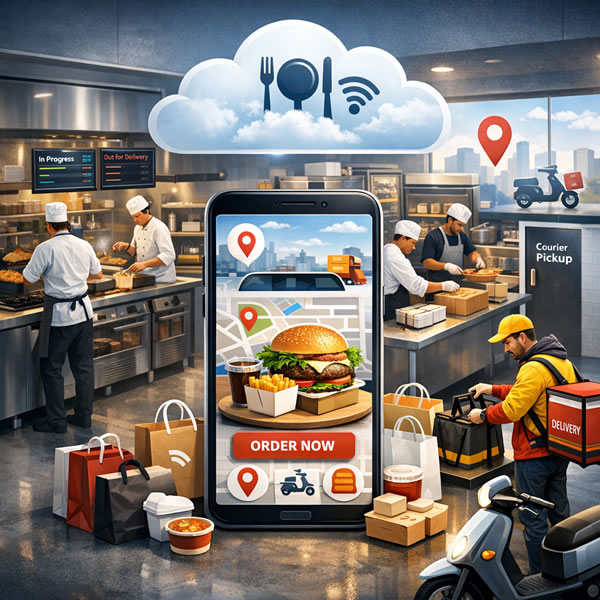
- ☁️ Cloud Kitchens
Commercial Kitchen Equipments
Cloud Kitchens (also known as ghost kitchens or delivery-only kitchens) are one of the fastest-growing trends in the food business industry. Restaurants across India are rapidly adopting the cloud kitchen model to stay competitive in the evolving food delivery market. Leading brands have already embraced this concept, highlighting its growing popularity and potential. However, despite the opportunities, the food business remains highly competitive and comes with challenges such as rising operational costs, expensive infrastructure, and intense market competition.
The increasing demand for food delivery, combined with high rental costs and operational expenses of dine-in restaurants, has significantly boosted the adoption of cloud kitchen setups. This model offers advantages such as lower real estate costs, reduced order processing time, and faster delivery, allowing businesses to serve more customers per hour compared to traditional dine-in setups. According to industry insights, nearly 67% of restaurants prefer opening a cloud kitchen over a dine-in outlet for their next expansion.
- 🍽️ What is a
Cloud Kitchen?
A cloud kitchen is an internet-enabled, delivery-only restaurant model designed for efficiency and cost-effectiveness. It eliminates the need for dine-in space, parking, and large front-end infrastructure, making it a hassle-free and scalable solution for modern food businesses. Often referred to as the future of takeaway, cloud kitchens focus on maximizing output while minimizing operational expenses.
Setting up a cloud kitchen in a city like New Delhi, India, with an approximate area of 200 sq. ft., can cost around ₹10 lakhs (approx.), depending on the menu variety, equipment, and operational scale. This makes it an attractive entry point for entrepreneurs and existing restaurants looking to expand.
Years of Experience
0
+
Projects Delivered
0
+
Satisfied Clients
0
+
Kitchen Products
0
+
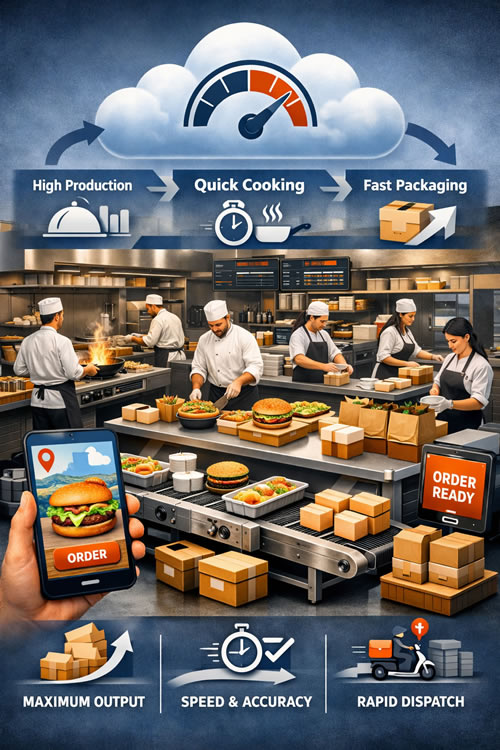
⚙️ Operations & Business Model
Cloud kitchens are designed to maximize order volume, speed, and efficiency by streamlining operations and reducing dependency on dine-in infrastructure. Orders are received through online platforms and integrated systems, enabling faster processing, real-time tracking, and smooth coordination between preparation and delivery.
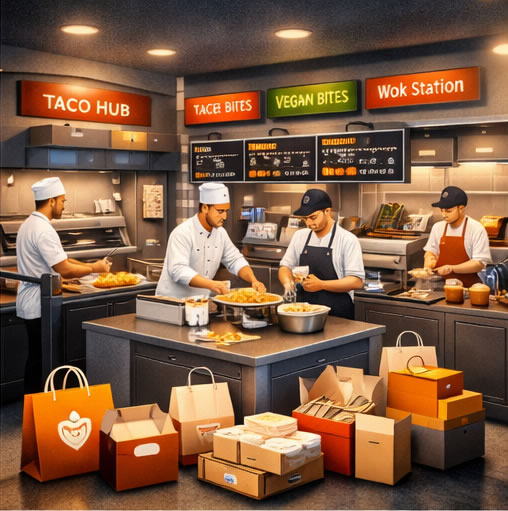
To improve productivity, many cloud kitchens adopt automation and optimized workflows, ensuring consistency in food quality and reducing preparation time. The widely used Hub and Spoke model allows central kitchens to handle bulk preparation while outlet kitchens complete final cooking and dispatch, ensuring standardization and faster service across multiple locations.
With proper zoning of preparation, cooking, and packaging areas, along with data-driven decision making, cloud kitchens achieve high efficiency, scalability, and cost-effective operations, making them ideal for modern food businesses.
Efficient inventory management and menu optimization also play a key role in the cloud kitchen model. By focusing on high-demand items and reducing unnecessary menu complexity, businesses can minimize food wastage, control costs, and maintain faster service, ultimately improving profitability and customer satisfaction.
🥗 Menu Strategy & Practical Considerations
Menus in cloud kitchens are typically designed for speed and efficiency, focusing on items that require minimal preparation time such as finger foods, salads, sandwiches, combo meals, and healthy options. The menu selection should be aligned with the target audience and local demand, as it directly depends on the area of operation.
It is advisable to keep the menu limited and well-optimized, ensuring faster service and better inventory management. Emphasis should also be placed on eco-friendly packaging and presentation, enhancing customer experience while supporting sustainability.
For businesses with limited resources, offering fewer but healthier and high-demand dishes is a more effective strategy than maintaining a wide variety. This approach reduces ingredient wastage, improves consistency, and ensures better sales performance. Since consumers often choose what is easily available, it becomes important to focus on providing nutritious and quality food options that meet customer expectations.
More Services
- Consultancy
- Layout Designing & Kitchen
- L.P.G Pipeline Designing
- Exhaust System Ducting
- Fresh Air Supply System
- AMC